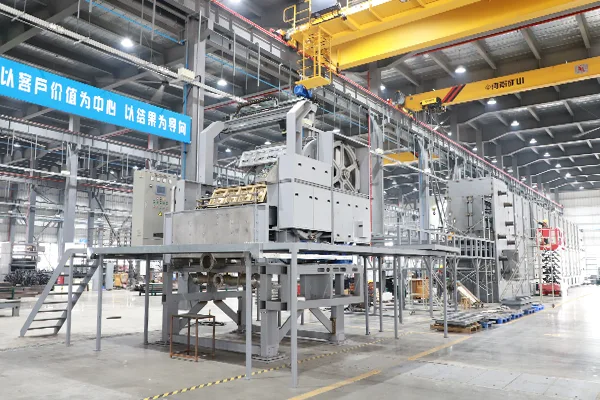
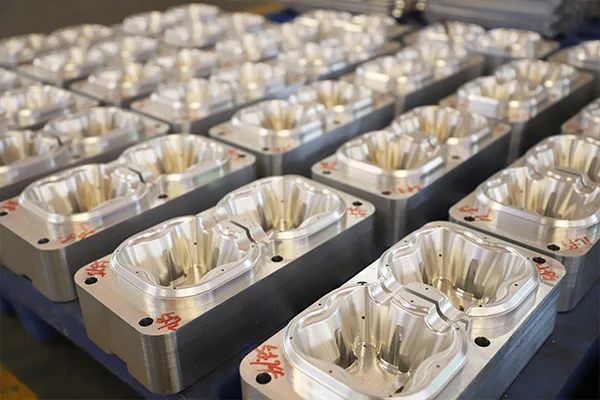
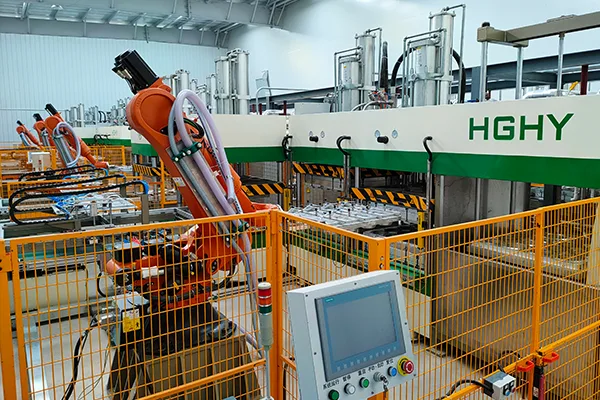
A pulp molding machine is industrial equipment that converts recycled paper, sugarcane bagasse, bamboo, or other natural plant fibers into three-dimensional, biodegradable packaging products. Using a combination of pulping, vacuum forming, pressing, and drying, it produces items such as egg trays, food containers, electronics inserts, and fruit cartons — replacing single-use plastic and polystyrene foam across a growing range of industries.
As plastic regulations tighten globally and major brands commit to fiber-based packaging, the pulp molding machine has emerged as one of the most strategically significant pieces of manufacturing equipment in sustainable packaging. This guide explains how it works, what it produces, and why investors and environmental professionals are paying close attention.
What is a pulp molding machine?
A pulp molding machine — also called a molded fiber machine or molded pulp machine — is the core piece of equipment in a fiber-based packaging production line. It takes a water-based slurry of cellulose fibers and forms it into rigid or semi-rigid shapes using molds, vacuum pressure, and heat.
The concept dates to the early 20th century, when the technology was first applied to egg carton production. Today’s systems are fully automated, AI-assisted production lines capable of producing 5,000 to 10,000+ units per hour, with applications ranging from premium consumer electronics packaging to medical device trays and agricultural seedling pots.
The machine is the forming stage of a larger production system. Its output quality depends directly on what comes before it: how the pulp is prepared, how clean the fiber is, and how consistent the slurry concentration is maintained throughout the run.
How does a pulp molding machine work?
The pulp molding process has four main stages. Each stage affects the final product’s strength, surface quality, and dimensional accuracy.
Stage 1 — Pulp preparation
Raw material — waste paper, cardboard, bagasse, bamboo, or wheat straw — is fed into a hydrapulper with water to create a uniform fiber slurry. The mixture is then screened and refined to remove contaminants such as plastic, metal, and adhesives, and to optimize fiber length for bonding. This stage determines the quality of every product that comes off the line.
Stage 2 — Forming
The cleaned pulp slurry is pumped into a forming tank. A mesh mold is immersed in the tank, and vacuum pressure draws fibers onto the mold surface in the exact shape of the final product. The wet molded item is then lifted out and transferred to the next stage. Automated controls maintain stable pulp concentration throughout, which is critical for uniform product thickness.
Stage 3 — Drying and hot pressing
For basic products such as egg trays, tunnel drying is sufficient to remove moisture and harden the shape. For premium applications — including thermoformed tableware, electronics inserts, and cosmetic packaging — hot pressing compresses the wet product between heated molds. This creates smooth, precise surfaces and eliminates the need for secondary finishing. Food-grade biodegradable coatings can be applied at this stage for water and oil resistance.
Stage 4 — Trimming and finishing
Thermoformed products are trimmed using hydraulic or hydro-pneumatic trimming machines to achieve dimensional accuracy. On fully automated lines, products are then counted, stacked, and packed with no manual intervention. One operator can manage a production line that previously required three or four workers.
What products can a pulp molding machine make?
Pulp molding machines produce a wide range of products across four quality grades, each suited to different applications and price points.
- Thick-wall products (5–10mm walls): Industrial packaging for automotive parts, pallet trays, and heavy equipment. Rough texture, maximum structural load-bearing capacity.
- Transfer-molded products (1–5mm walls): Egg cartons, fruit trays, wine shippers, and standard electronics packaging. After-pressing improves stackability and surface finish.
- Thermoformed products (0.7–2mm walls): Premium retail packaging where appearance matters — the surface is smooth enough to rival injection-molded plastic. Used by Apple, Samsung, and major consumer brands.
- Emerging applications: Paper bottles and liquid containers, produced via pressurized air molding. Multiple global producers have active R&D programs in this area.
End-use applications include food and beverage packaging (the largest segment at 46.7% of market revenue in 2025), electronics protection, agricultural seedling trays, medical device packaging, food service disposables, and retail cosmetics.
What types of pulp molding machines are available?
Machine configurations range from simple manual systems to fully integrated automated production lines. The right choice depends on production volume, product complexity, and capital budget.
- Manual / semi-manual machines: Output up to 500 kg/day. Low capital cost entry point for small-scale operations, pilot projects, and workshops. Rely on manual handling and basic drying methods.
- Semi-automatic machines: Produce 1,000–3,000 pieces per hour. Automate forming and some transfer steps, with partial manual work in drying or stacking. Suitable for small to mid-sized manufacturers scaling up. Investment typically $50,000–$150,000.
- Fully automatic machines: Integrate pulping, forming, drying, counting, and stacking in a continuous line. Output reaches 5,000–10,000+ pieces per hour. Ideal for large-scale production. Mid-range systems cost $300,000–$800,000; complete high-volume lines exceed $2 million.
- Thermoforming / hot-press machines: Combine forming and hot pressing to produce high-precision, smooth-surface products for electronics, cosmetics, and premium tableware. Higher capital cost, higher margin output.
- Robotic forming machines: Six-axis industrial robots for ultra-precision forming. Used for complex shapes, specialty packaging, and prototype runs.
Automatic pulp molding machines represent 47.8% of the global market in 2025, reflecting a strong shift toward high-volume, low-labor production models.
Why is the pulp molding machine market growing?
The demand for pulp molding equipment is driven by a convergence of regulatory pressure, corporate sustainability commitments, and shifting consumer expectations — all pointing in the same direction.
Regulatory tailwinds
The European Union’s Single-Use Plastics (SUP) Directive restricts polystyrene foam packaging across member states. China and Taiwan banned foam food containers as early as 1999. Regulations in Southeast Asia, Latin America, and Africa are following with their own restrictions and phase-out timelines. These are not voluntary measures — they create hard deadlines for manufacturers to find alternatives.
Corporate demand at scale
Apple achieved 100% fiber-based packaging across its entire product line in 2024, ahead of its own internal target. Samsung launched molded pulp packaging for the Galaxy S24. Walmart committed to 100% recyclable, reusable, or compostable packaging by 2025, creating a procurement signal that cascades across its entire global supplier base.
Market size and growth trajectory
The global pulp molding machine market was valued at approximately $820 million in 2025 and is projected to reach $1.2 billion by 2035, growing at a compound annual growth rate (CAGR) of approximately 4.1% (Future Market Insights, 2025). The broader molded fiber packaging market — the output these machines produce — was valued at $10.2 billion in 2024 and is forecast to reach $20.6 billion by 2035, growing at 6.8% CAGR. Asia-Pacific leads regional demand with approximately 45% market share, driven by China and India.
Circular economy alignment
Recycled paper accounts for 88.7% of total production volume, meaning the raw material input is largely waste that would otherwise enter landfills. Closed-loop water treatment systems recover process water for reuse. The output is biodegradable, compostable, and recyclable. Few manufacturing technologies align as naturally with circular economy principles at industrial scale.
What should investors and sustainability professionals know?
Pulp molding offers a compelling structural investment thesis, but like any industrial category, it comes with specific risks and constraints that require clear-eyed evaluation.
Key opportunities
- Durable regulatory tailwind across multiple major markets simultaneously
- Strong brand-level demand from Fortune 500 companies with binding packaging commitments
- Low and stable raw material costs (recycled paper: approximately $100–200 per ton)
- Expanding addressable market as thermoformed and paper bottle applications come online
- Automation reducing per-unit labor costs and improving consistency at scale
- AI-driven quality inspection and predictive maintenance reducing downtime
Risks to monitor
- Design constraints relative to plastic: complex geometries and visual surface quality remain limitations, particularly in premium food packaging
- High upfront capital requirements ($50K to $2M+ depending on automation level)
- Water-intensive production process requiring wastewater treatment infrastructure
- Moisture sensitivity without additional biodegradable coatings
- Competition from recycled plastics and bioplastics in some application segments
For environmental professionals evaluating manufacturing partners or suppliers, key certifications to look for include ISO quality standards, food safety approvals for food-contact applications, and compostability certifications from bodies such as BPI (Biodegradable Products Institute). Machines that can process multiple fiber types — bagasse, bamboo, recycled paper — offer greater supply chain flexibility and resilience.
Frequently asked questions
What is a pulp molding machine in simple terms?
A pulp molding machine is industrial equipment that converts recycled paper or natural plant fibers — mixed with water to form a slurry — into biodegradable, three-dimensional packaging products such as egg trays, food containers, and electronics inserts. It is the core technology behind most fiber-based packaging that replaces plastic and foam.
How much does a pulp molding machine cost?
Prices range from $50,000–$150,000 for semi-automatic systems suitable for small to mid-sized production, to $300,000–$800,000 for mid-range automated lines, and over $2 million for complete high-volume production systems with advanced automation features.
What raw materials does a pulp molding machine use?
The most common input is waste paper and recycled cardboard, which accounts for 88.7% of total production volume globally. Other materials include sugarcane bagasse (a byproduct of sugar production), bamboo, wheat straw, and — for specialized applications — virgin wood pulp. The choice of fiber affects product strength, surface finish, and cost.
Is pulp molded packaging truly compostable?
Standard molded pulp products are biodegradable and compostable. Food-grade biodegradable coatings can be applied to improve water and oil resistance — allowing products to hold hot liquids and function in microwaves up to 120°C — without compromising compostability.
How fast can a pulp molding machine produce products?
Semi-automatic systems produce 1,000–3,000 pieces per hour. Fully automated lines reach 5,000–10,000+ pieces per hour depending on product complexity and mold configuration. High-volume egg tray production lines can exceed 10,000 units per hour.
Which industries use pulp molded packaging?
The largest end market is food and beverage (46.7% of revenue in 2025), driven by egg, fruit, and vegetable packaging. Other significant markets include consumer electronics, food service disposables, healthcare and medical device packaging, agricultural horticulture (seedling trays), and premium retail consumer goods.
What is the difference between thermoformed and transfer-molded pulp?
Transfer-molded pulp (1–5mm wall thickness) is the standard grade used for egg cartons, fruit trays, and most industrial packaging — it has a slightly textured surface. Thermoformed pulp (0.7–2mm) goes through additional hot pressing, creating a smooth, plastic-like surface finish suitable for premium retail packaging and consumer electronics. Thermoformed products command higher margins but require greater capital investment in equipment.
How does pulp molding contribute to sustainability?
Pulp molding supports a circular economy in several ways: it uses waste paper as its primary raw material (diverting it from landfill), the output is biodegradable and compostable, water treatment systems recover and recycle process water, and the technology directly replaces single-use plastics and non-degradable foam. Modern automated lines also incorporate energy recovery systems that capture heat from drying processes for reuse within the production cycle.