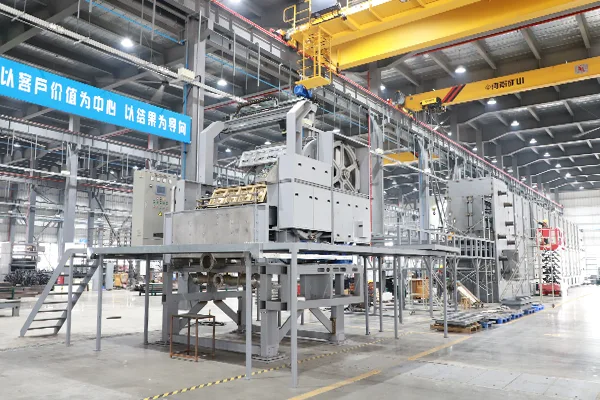
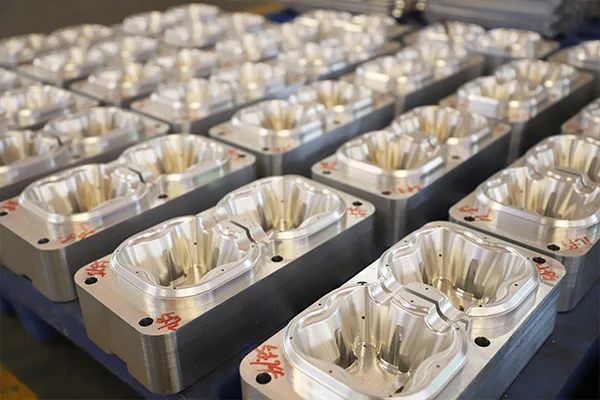
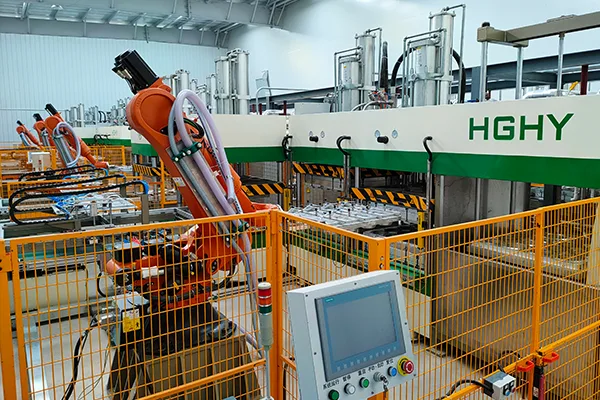
The foodservice packaging industry is undergoing a fundamental shift. As single-use plastic bans spread across more than 80 countries and consumer expectations for sustainable packaging accelerate, the custom molded fiber coffee cup carrier has moved from a niche alternative to a mainstream production priority — and investing in the right machine is now a strategic decision for manufacturers and packaging converters worldwide.
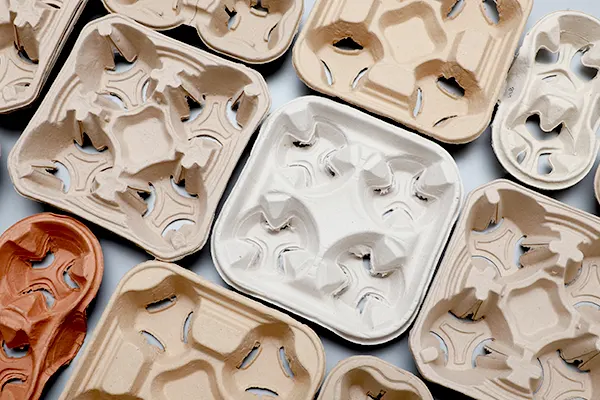
What Is a Custom Molded Fiber Coffee Cup Carrier Machine?
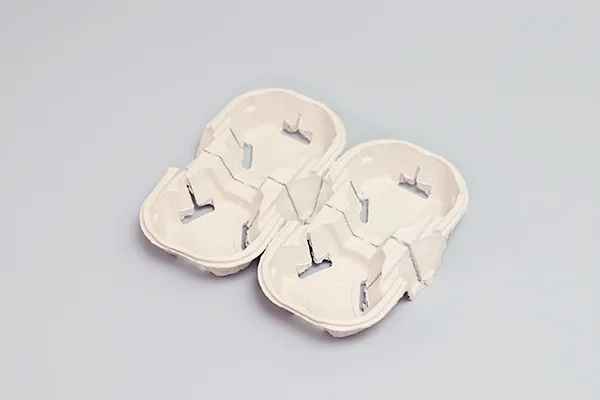
A molded fiber coffee cup carrier machine is a purpose-built production line that converts recycled paper pulp or natural plant fiber into shaped, three-dimensional carriers designed to hold two, four, or more beverage cups securely during transport. The output — sometimes called a cup tray, drink carrier, or pulp cup holder — is fully biodegradable, compostable, and increasingly mandated by legislation as a replacement for plastic alternatives.
The “custom” element is critical: modern machines allow manufacturers to produce carriers in different cup configurations (2-cup, 4-cup, 6-cup), adapt to varying cup base diameters from 12 oz to 32 oz, and emboss logos or branding directly into the mold itself, eliminating the need for secondary labeling.
How the Machine Works: The Five-Stage Production Process
Understanding the production process helps buyers evaluate machine quality, output capacity, and long-term operating costs. A fully automatic line runs through five integrated stages.
Waste paper (old newspapers, corrugated cardboard, office paper waste) or alternative fibers such as sugarcane bagasse or bamboo are fed into a hydrapulper along with water. The material is shredded and suspended into a uniform slurry at approximately 4–5% consistency. Additives can be incorporated at this stage to improve surface smoothness or structural strength.
The pulp slurry is drawn onto precision metal molds using negative pressure and vacuum adsorption. The vacuum ensures the fiber spreads evenly across the mold surface, replicating the cup-well geometry with consistent wall thickness. This stage produces a wet blank that retains its shape but still carries significant moisture.
The wet blanks pass through a drying system to remove moisture. Configurations range from natural air drying (low capital cost, low volume) to single-layer metal tunnel dryers and high-capacity multi-layer metal dryers with heat recovery — the preferred option for industrial-scale production.
For carriers requiring a smooth, premium surface finish, an optional hot-press stage densifies the dried product under controlled temperature and pressure. This “cure-in-the-mold” process produces well-defined smooth-surfaced products that emerge in finished state — no additional oven drying required.
On fully automatic lines, PLC-controlled robotics handle demolding, inspection, stacking, and packaging with no manual intervention. The entire process is managed through a central control system where operators set parameters rather than physically handle product.
Machine Capacity: Matching Output to Business Scale
Production capacity is typically rated in pieces per hour (pcs/h). Matching capacity to your business scale is one of the most important decisions in the purchasing process.
| Production Scale | Output Range | Typical Application |
|---|---|---|
| Small / Entry-level | 1,000 – 2,000 pcs/h | Startup operations, regional suppliers |
| Medium | 3,000 – 5,000 pcs/h | Mid-size packaging converters |
| Large / Industrial | 6,000 – 10,000+ pcs/h | National-scale manufacturers, OEM suppliers |
Leading equipment manufacturers can customize machines outside these ranges. When evaluating capacity, account for mold changeovers, maintenance downtime, and whether the line will run single or double shift operations.

Key Technical Specifications to Evaluate
When comparing machines from different suppliers, these specifications have the greatest impact on product quality, operating cost, and long-term flexibility.
Aluminum alloy or stainless steel molds deliver superior dimensional consistency and longer service life. Precision-machined tolerances are essential — even small variations cause cups to sit loose or refuse to seat properly.
Drying accounts for the largest share of operating energy. Multi-layer metal dryers with heat recovery reduce consumption significantly versus older brick kiln designs. Always request verified kWh per 1,000 pieces.
Fully automated PLC lines reduce labor costs and minimize human error throughout forming, demolding, and stacking. Semi-automatic lines suit lower-volume operations where labor costs remain competitive.
For lines producing both 2-cup and 4-cup configurations, fast changeover capability reduces downtime between runs and increases overall line utilization across your SKU range.
The best machines accept old newspapers (ONP), corrugated cardboard (OCC), office paper waste, and non-wood fibers like sugarcane bagasse — protecting against feedstock supply disruptions and price volatility.
Confirm whether the machine can be expanded post-installation — for example, adding a hot-press stage as your product mix moves upmarket. Modular architecture protects capital investment long-term.
Why the Market Opportunity Is Exceptionally Strong Right Now
The business case for investing in custom molded fiber coffee cup carrier production is supported by both regulatory tailwinds and strong underlying demand growth.
The global molded fiber pulp packaging market is valued at approximately USD 10.7 billion in 2025 and projected to reach USD 20.6 billion by 2035 at a CAGR of 6.8%. More than 80 countries have introduced legislation limiting plastic packaging, displacing over 1.9 million metric tons of single-use plastic in 2023 alone. Recycled pulp accounts for approximately 88.7% of total fiber packaging production in 2025, driven by cost advantages, supply availability, and lower carbon footprint.
In the food and beverage segment, food packaging represented nearly 50% of molded fiber revenue in recent years, and the continued growth of takeaway and delivery culture has made spill-proof, multi-cup carriers a standard operational requirement for cafés, quick-service restaurants, and delivery aggregators.
On the supply side, major players — including Huhtamäki, UFP Technologies, and Brødrene Hartmann — are scaling capacity aggressively. In March 2025, Huhtamäki opened a dedicated new molded fiber production facility in North America, and in January 2025, TekniPlex Consumer Products launched a 200,000-square-foot facility dedicated exclusively to molded fiber solutions. For smaller manufacturers and regional converters, this signals the direction of the market while creating a window to establish position before consolidation accelerates.
Custom Branding: More Than Just a Carrier
One of the most commercially significant features of modern molded fiber machines is the ability to produce fully branded carriers at no additional per-unit cost. Because branding is incorporated directly into the metal mold tooling, logos, typography, and structural design elements are pressed into every unit during forming — eliminating ink, labels, and secondary decoration processes entirely.
This matters for the coffee shop and foodservice market, where carriers are a visible brand touchpoint. A well-designed custom carrier communicates brand values, reinforces sustainability positioning, and functions as mobile advertising during every delivery and takeaway order. Machines that support custom mold tooling typically enable a 15–30% price premium over generic commodity carriers in competitive markets.
Selecting the Right Supplier: Questions to Ask
Choosing a machine supplier is as important as choosing the machine specification itself. Use this checklist to distinguish serious industrial equipment manufacturers from lower-tier vendors.
- Can you provide verified production data — output per hour, energy consumption per 1,000 pieces, uptime rates — from existing customer installations?
- What is your mold tooling lead time for custom configurations, and what is included in the tooling warranty?
- What spare parts inventory do you maintain, and what is your typical field service response time?
- Can the machine be upgraded (e.g., adding a hot-press stage) after initial installation?
- What training and commissioning support is provided, and in what languages?
- Do you offer pilot production runs using the buyer’s raw material feedstock before final delivery?
Raw Material Considerations
Raw material quality directly affects product consistency and machine throughput. Maintaining feedstock at 4–5% slurry consistency through the pulping stage is critical for even vacuum forming and consistent wall thickness. The four primary feedstock options each serve a different production need:
Long fiber length provides a strong strength-to-weight ratio. Widely available and low cost — the most common feedstock for entry-level and mid-scale lines.
Higher bulk density and excellent structural rigidity. Best suited for heavy-duty 4-cup configurations where load-bearing performance is a priority.
Shorter fibers produce a smoother surface finish — preferred when hot-press finishing is specified for premium-grade branded carriers.
Non-wood agricultural fiber specified where certified compostable or non-wood-pulp documentation is required. Fully compatible with standard forming and hot-press equipment.
Environmental & Regulatory Compliance
Molded fiber coffee cup carriers produced on modern equipment are inherently positioned to meet current and near-term regulatory requirements across all major markets.
Carriers from 100% recycled paper or natural fiber with no synthetic coatings are fully biodegradable and industrially compostable — meeting EU single-use plastics regulation and equivalent legislation in the UK, Canada, Australia, and major Asian markets.
Uncoated molded fiber carriers are accepted in standard paper recycling streams in most jurisdictions — a significant advantage over plastic-lined or laminated alternatives.
Molded fiber production from recycled feedstock carries a substantially lower carbon footprint than virgin plastic alternatives. Suppliers should provide process-level energy data for life-cycle assessment documentation.
For businesses serving multinational QSR chains or major coffee brands, the ability to provide regulatory compliance documentation across multiple jurisdictions is becoming a standard procurement requirement.
ROI Framework: Calculating Your Payback Period
USD 0.03–0.08 per unit (varies by configuration, volume, market). Custom branded carriers typically earn the upper end of this range.
Capital cost amortized over 8–12 years, raw materials, energy, labor (lower on full-auto lines), mold tooling (3–5M cycle life), and maintenance.
Mid-scale installations at 3,000–5,000 pcs/h typically achieve payback in 2–4 years under realistic operating assumptions.
Key payback accelerators include double-shift operation, fast mold changeover enabling multi-SKU production on a single line, and the custom branding premium. Local labor cost, energy tariffs, and feedstock pricing all influence the final figure — request a customized model from your equipment supplier.
Summary
The custom molded fiber coffee cup carrier machine represents one of the strongest equipment investment cases in sustainable packaging manufacturing today. Regulatory pressure is structural and accelerating. Market demand is growing at high single-digit rates through 2035. The technology is mature, scalable, and commercially proven at installations worldwide. And the custom branding capability transforms a commodity packaging item into a differentiated brand asset for the cafés, restaurant chains, and delivery operators that purchase it.
Buyers who evaluate machines on the full specification framework — capacity, drying efficiency, automation level, mold flexibility, and supplier support quality — rather than on purchase price alone will be best positioned to build a durable, profitable production operation in this expanding market.
Ready to Explore Cup Carrier Machine Specifications?
Get detailed technical specifications, capacity options, and custom mold configurations for fully automatic pulp cup carrier production lines.
View Machine Specifications →