As fresh produce retail shifts from open bulk displays toward pre-packed, tamper-evident presentation, the demand for plastic and biodegradable fruit trays has grown steadily across supermarkets, e-commerce fresh-food channels, and export cold chains. A fruit tray thermoforming production line sits at the center of this trend: it is a capital-efficient way to convert raw plastic sheet or biodegradable material directly into finished, ready-to-use trays in a single continuous process.
For investors and manufacturers, the appeal lies in three factors. First, the equipment has a relatively short payback period compared to other packaging machinery, since a single line can produce tens of thousands of trays per day with modest labor input. Second, raw material flexibility — PP, PET, PLA, and increasingly plant-fiber or biodegradable composites — allows producers to pivot toward eco-friendly packaging as regulations tighten in the EU, North America, and parts of Asia, without needing to replace core equipment. Third, the customer base is broad and recession-resistant: fresh fruit and vegetable packaging is a staple category, not a discretionary one, which gives producers a stable order pipeline from supermarket chains, fruit exporters, food processors, and packaging distributors.
Market prospects remain favorable for several structural reasons. The global move away from single-use foam and away from certain single-use plastics is pushing buyers toward recyclable PET and compostable alternatives, creating replacement demand even in mature markets. Meanwhile, emerging markets are still building out modern retail and cold-chain infrastructure, which drives first-time demand for pre-packed produce trays. Export-oriented fruit growers also increasingly rely on molded trays for cushioning and branding during long-distance shipping, adding another demand stream. Taken together, these dynamics support continued investment interest in thermoforming lines, particularly those configured for quick mold changeovers and multi-material processing, since flexibility is what allows a single production line to serve several customer segments at once.

What Is a Fruit Tray Thermoforming Machine?
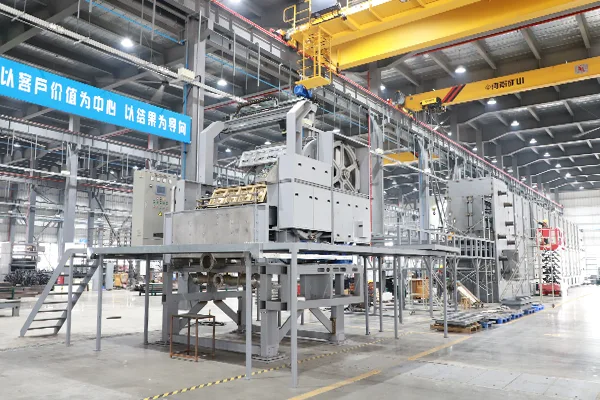
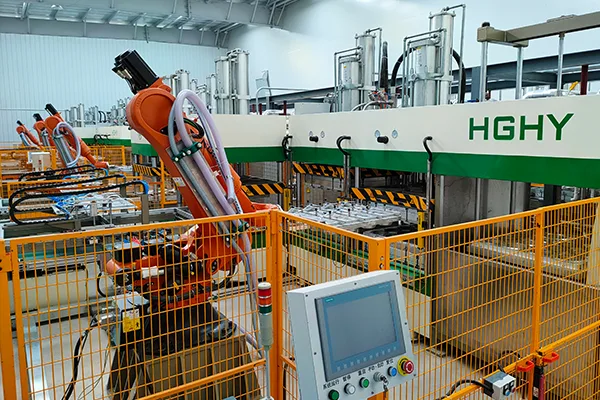
A fruit tray thermoforming machine is an automated production system that heats flat plastic or biodegradable sheet material until it becomes pliable, then forms it into three-dimensional tray shapes using vacuum, air pressure, or mechanical molds. Once formed, the sheet is cooled, trimmed, and separated into individual trays ready for stacking and shipment.
Unlike injection molding, which is better suited to thick, rigid parts, thermoforming is ideal for producing thin-walled, lightweight containers at high speed and lower per-unit tooling cost — which is precisely the profile fruit and produce trays need.

Core Functions of the Production Line
A complete fruit tray thermoforming line typically integrates the following stages:
- Sheet feeding and unwinding: Roll-fed plastic or fiber sheet is fed continuously into the machine, reducing manual handling and downtime.
- Heating: Infrared or ceramic heaters bring the sheet to a precise, uniform forming temperature — critical for consistent wall thickness and preventing warping.
- Forming: Vacuum or pressure forming presses the softened sheet into mold cavities, shaping trays, clamshells, or nested container designs.
- Cooling: Rapid cooling stabilizes the tray shape before it moves to trimming.
- Trimming and stacking: In-line or offline punching/trimming stations cut individual trays from the sheet, and automatic stackers count and collect finished trays for packing.
- Scrap recovery: Leftover sheet skeleton is often re-ground and recycled back into raw material, improving material yield and reducing waste costs.
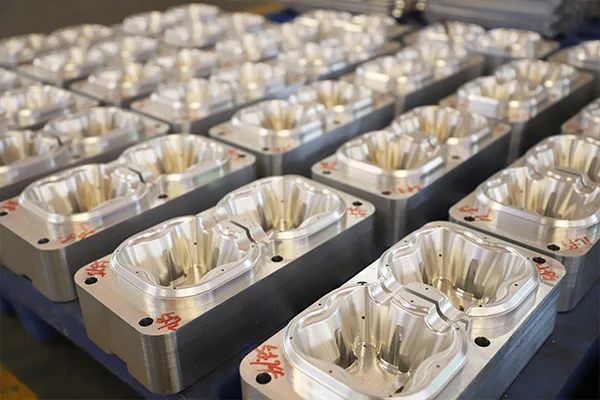
Modern lines add servo-driven mold platens, PLC control systems, and quick-change mold stations, which shorten changeover time between different tray designs — a major advantage for manufacturers serving multiple clients with different specifications.
What Products Can It Make?
While built around fruit trays, this type of line is inherently multi-purpose. Typical outputs include:
- Fresh fruit trays (grapes, strawberries, cherry tomatoes, berries)
- Vegetable trays and produce punnets
- Clamshell containers with hinged lids
- Nested trays for eggs, mushrooms, or delicate produce
- Meat, poultry, and seafood trays
- Bakery and deli trays
- Biodegradable or compostable trays using PLA, bagasse-composite, or paper-plastic blends
Because mold sets can be swapped, a single machine investment can serve several packaging categories rather than being locked into one product line, which improves equipment utilization and revenue diversification.
Application Scenarios
- Supermarkets and retail chains: Pre-packed produce trays speed up checkout, reduce bruising, and support portion-controlled pricing.
- Fresh produce exporters: Trays provide cushioning and stacking stability for long-haul shipping, reducing spoilage-related losses.
- E-commerce and fresh-food delivery: Individually sealed trays help maintain freshness and hygiene standards during last-mile delivery.
- Food processing plants: Trays are used for pre-cut fruit, ready-to-eat fruit cups, and mixed produce packs.
- Packaging converters and distributors: Many mid-sized packaging companies invest in thermoforming lines specifically to supply trays to multiple downstream brands rather than making their own end product.
Why the Investment Case Holds Up
From a business-planning perspective, a few practical points matter to prospective buyers:
- Utilization drives returns. Lines running multiple shifts with quick mold changeovers achieve faster payback than single-shift, single-product operations.
- Material strategy affects margins. Producers that can process both conventional PET/PP and biodegradable alternatives are better positioned to win contracts from retailers under sustainability mandates, often at a price premium.
- Scrap recycling reduces cost per unit. In-line regrind systems meaningfully lower raw material spend over time, which matters given that resin cost is typically the largest variable expense in tray production.
- Local demand plus export potential. Because fruit and vegetable packaging demand exists in virtually every market with organized retail, a line’s output rarely depends on a single customer or region.
Conclusion
A fruit tray thermoforming production line offers a practical entry point into the packaging manufacturing sector: moderate capital requirements, flexible product output, and demand that tracks the steady, non-cyclical fresh produce industry. As sustainability regulations continue to reshape packaging material choices, lines capable of handling both conventional and biodegradable substrates are likely to be the most resilient investment, positioning operators to serve retail, export, and e-commerce fresh-food channels simultaneously.