There Is No Universal Winner
Anyone planning a molded pulp egg tray plant will eventually face the same question: rotary (drum-type) or reciprocating machine? The honest answer is that neither is better in absolute terms. The right choice depends on how well the machine fits your order structure, target output, factory building, and budget. A rotary line that is perfect for a plant with one high-volume customer can be a poor investment for a workshop serving ten customers with ten different products. The reverse is equally true.
This article explains how each type works, where each is strong or weak, and how to match them to real operating conditions.


How Rotary (Drum-Type) Lines Work
A rotary machine mounts forming molds on a rotating drum or multi-sided carrier that turns continuously through a pulp vat. At each position, the mold picks up a wet pulp layer by vacuum, rotates out of the slurry, transfers the wet tray to a conveyor, and returns to repeat the cycle. Forming is a continuous, smooth motion with no stop-and-go.
Strengths
- High output. Typical capacity is roughly 3,000–7,000 trays per hour, and high-end configurations exceed 10,000.
- Continuous, stable running. Smooth rotation means less mechanical shock, which suits long production runs.
- Good consistency. With stable conditions, weight and shape variation between trays is low.
- Energy advantage at scale. When running large volumes of one product, energy use per tray is generally lower.
Limitations
- Higher investment. The machine itself, the conveying system, and the matching drying line all cost more.
- Slow mold changeover. Changing products takes considerable time and labor, so frequent switching erodes the productivity advantage.
- Longer building required. The drying line that must match this output is long, so the plant needs sufficient length.
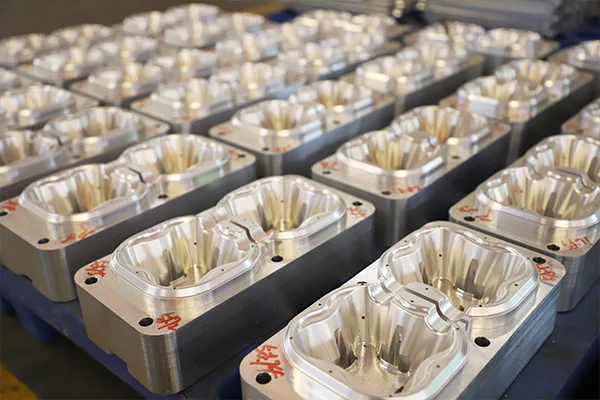
- Expensive molds. Molds for rotary machines cost more, and a new product means a substantial tooling budget.
How Reciprocating Lines Work
A reciprocating machine uses a mold that moves back and forth (or up and down) between the pulp vat and a transfer position. The mold dips into the slurry, forms the wet tray under vacuum, lifts, moves to the transfer station, releases the tray, and returns. The cycle is intermittent rather than continuous.
Strengths
- Fast mold changeover. Switching products is relatively quick, which suits frequent order changes.
- Flexible product range. It handles multiple tray types, irregular paper trays, and thicker products well.
- Good tray flatness. Flat, well-formed trays feed more reliably into automatic egg-packing lines.
- Lower entry cost. Machine and supporting equipment cost less, and the building can be shorter.
Limitations
- Lower output. Typical capacity is about 800–2,000 trays per hour.
- Intermittent impact. The start-stop motion creates mechanical shock.
- Higher wear in continuous operation. Running 24 hours a day tends to increase consumption of wear parts and maintenance effort.
- Higher unit energy at volume. In large-scale production, energy use per tray is usually higher than on rotary lines.
Side-by-Side Comparison
| Item | Rotary (Drum-Type) | Reciprocating |
|---|---|---|
| Hourly output | ~3,000–7,000 trays; high-end 10,000+ | ~800–2,000 trays |
| Suitable products | Long-run, single standard egg trays | Multiple products, irregular paper trays, thick trays |
| Mold changeover | Slow and difficult | Fast and relatively easy |
| Building requirements | Long building needed (especially for drying line) | Shorter, more compact layout |
| Investment | High | Lower |
| Continuous running stability | Very good; smooth motion suits long runs | Acceptable, but shock raises wear in 24-hour operation |
| Product consistency | Good in stable, high-volume production | Good, with strong flatness for automatic packing |
| Energy consumption | Advantage at large scale | Higher per tray at large scale |
Note that these figures are typical ranges. Actual results vary with product weight, pulp quality, drying method, and operator skill, so always confirm against specific supplier data and reference plants.
Choosing by Scenario
Rotary is usually the better fit when:
- You have stable, long-term orders for one or two standard egg tray designs.
- Your target is several thousand trays per hour or more, running most hours of the day.
- You supply large egg farms or distributors with predictable demand.
- You have a long enough building and the capital for the full line.
- Low cost per tray at volume matters more than flexibility.
Reciprocating is usually the better fit when:
- You serve many customers and switch between product types often.
- Your range includes irregular paper trays, thick-walled products, or other specialty shapes.
- Your customers use automatic egg-packing lines and need flat, dependable trays.
- Your market is still developing and you want lower upfront risk.
- Your building is limited in length, or your budget is tight.
- You plan to start small and add capacity later.
A middle path: some plants run a rotary line for the core standard product and a reciprocating machine for specialty orders. This costs more to set up but can protect margins on both fronts.
Avoiding Common Buying Mistakes
Do not compare only the machine price. The forming machine is just one part of the total investment. Before deciding, calculate the whole system:
- Drying line. Its length, structure, and energy consumption have a large effect on both investment and running cost. A cheap machine paired with an underspecified dryer will not reach rated output.
- Heat source. Natural gas, coal, biomass, diesel, and electricity differ widely in fuel cost, local availability, environmental compliance, and installation cost. Drying is typically the largest energy expense in the plant, so price the fuel you will actually use.
- Mold cost and lifespan. Ask for the price per set, expected life, and cost of each new product. For rotary lines, a full set of molds is a major budget item; for reciprocating lines, count how many sets your product mix requires.
- Wear parts and maintenance. Request a spare parts list with prices and typical replacement intervals, especially if you plan continuous operation.
- Auxiliary systems. Pulping, vacuum pumps, water treatment, stacking, and packing all take space and money.
- Building and utilities. Check length, height, floor load, power capacity, and water supply against the supplier’s layout drawing.
- Labor and training. Compare staffing needs and commissioning support.
Finally, work backwards from your real orders. Estimate realistic monthly volume, product variety, and growth over three to five years, then calculate total cost per tray, including depreciation, energy, labor, molds, and maintenance. Visit operating plants running the same product you intend to make, and ask owners about downtime and actual output rather than rated output.
The best machine is the one that matches your orders and your plant, not the one with the biggest number on the brochure.