In molded pulp egg carton production, the machines that switch sizes most easily are those built around modular, quick-change molds and standardized mold mounting, rather than around one fixed drum or one fixed carton format. Examples include the 7000B2C, 9000B2C and 12000B2C series, which share a common maximum product height of 70 mm, so one machine platform can cover a range of carton formats by swapping mold sets. Flexibility depends less on the brand than on how the molds, transfer system and drying line are designed.


Why “minimal tooling change” is mostly about the molds
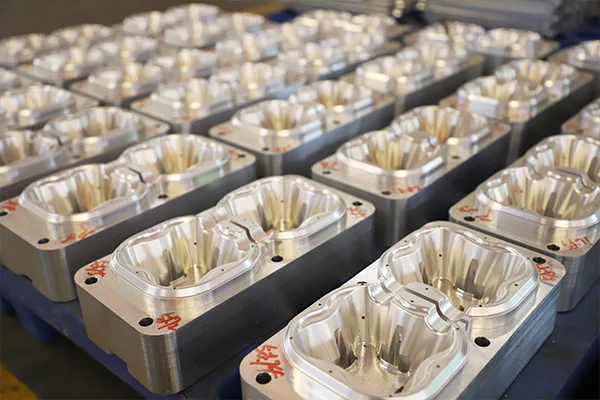
An egg carton is formed on a mold whose cavities match the egg count and shape: 6, 10, 12, 15, 18 or 30 cells, in tray or hinged-lid format. Changing the size means changing some or all of these parts:
- Forming molds (the pulp-side tooling)
- Transfer molds (which move the wet carton to the next stage)
- Hot-press or shaping molds (for smoother, premium cartons)
- Sometimes drying-line spacing and trimming dies
A machine is easy to switch when these parts share standard mounting dimensions, so operators swap mold plates rather than rebuild the machine. Plug-in vacuum and water connections, and a transfer system that can be reprogrammed instead of re-machined, also shorten the changeover.
Machine types compared
| Machine type | Output level | Size-change flexibility | Best for |
|---|---|---|---|
| Rotary (drum) forming | High | Low to moderate; many mold sets are affected at once | Long runs of one or two sizes |
| Reciprocating / shuttle forming | Medium | Moderate to high | Mixed orders, several carton sizes |
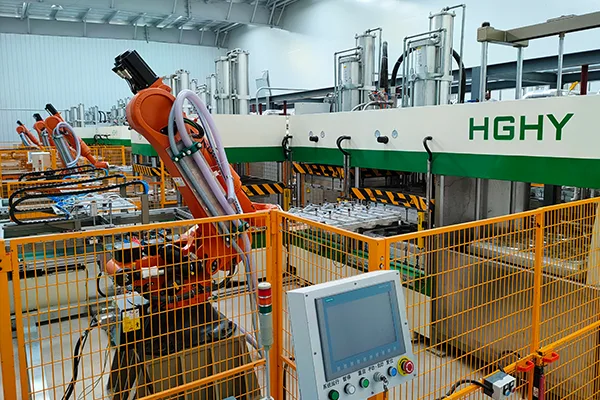
| Robot / servo-transfer lines | Medium to high | High when mold interfaces are standardized | Producers who change formats often |
These are general tendencies. Ask every supplier, including us, for documented changeover times.
Our B2C series: three capacity levels, one product-height range
| 7000B2C | 9000B2C | 12000B2C | |
|---|---|---|---|
| Floor plan (L × W × H) | 72 × 18 × 8 m | 90 × 18 × 8 m | 90 × 24 × 8 m |
| Labor per shift | 5–6 | 5–6 | 6–7 |
| Max product height | 70 mm | 70 mm | 70 mm |
| Nominal capacity | [e.g. 7,000 pcs/h] | [e.g. 9,000 pcs/h] | [e.g. 12,000 pcs/h] |
| Carton formats supported | [e.g. 6/10/12/15/18/30-cell] | [same] | [same] |
| Typical changeover time | [X hours, measured on site] | [X hours] | [X hours] |
A few practical points from this table:
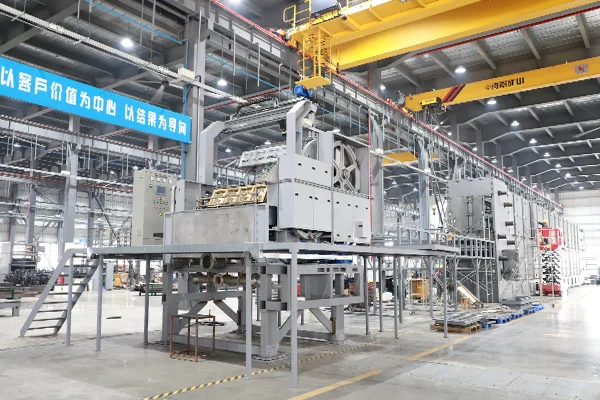
- Space planning: The 7000B2C and 9000B2C share the same 18 m width, so the larger model mainly needs more length. The 12000B2C needs a wider hall (24 m). Check ceiling height (8 m) and column spacing before choosing.
- Labor: The models need roughly 5–6 operators per shift, and 6–7 for the 12000B2C. Higher capacity does not mean proportionally more staff.
- Product height: A 70 mm maximum height covers [standard egg trays and closed-lid cartons; confirm your tallest format]. Deeper packaging such as special-purpose trays should be checked before ordering.
Features that actually reduce changeover time
- Modular mold plates: cavities replaced without replacing the mold base.
- Quick-release clamping instead of many bolts.
- Standardized vacuum and air manifolds: fewer fittings to disconnect.
- Programmable transfer positions set in software.
- Adjustable drying-line and conveyor spacing.
- Stored recipes per carton size (pulp consistency, vacuum timing, press temperature).
Realistic expectations
A size change is never one button. Expect to swap molds, check alignment, adjust parameters and run trial cartons. Depending on the line and crew experience, this ranges from a couple of hours to most of a shift. Each additional size also needs its own mold set, so plan a mold inventory around the sizes that make up most of your orders.
Questions to ask any machine supplier
- Which carton sizes can the same base machine produce?
- Which parts must be replaced for each size: forming, transfer, press molds, trimming dies?
- What is the documented changeover time, and who measured it?
- What is the price and lead time for extra mold sets?
- Can I visit or contact a customer running several formats?
Choosing by production profile
- One or two sizes, high volume: choose the capacity tier that matches demand, 12000B2C for the largest plants.
- Several sizes, frequent order changes: prioritize modular molds and recipe storage over raw output.
- Limited factory space or budget: the 7000B2C footprint (72 × 18 m) is the most compact of the three.
- Starting out: begin with fewer mold sets and add sizes as orders grow.
FAQ
Can one machine make both egg trays and lidded cartons? Sometimes, but they usually need different mold sets. Confirm with the supplier for your formats.
How much floor space does a 9000B2C line need? The listed floor plan is 90 × 18 × 8 m (length × width × height).
How many workers are needed per shift? About 5–6 for the 7000B2C and 9000B2C, and 6–7 for the 12000B2C.
What is the maximum carton height? 70 mm on all three models.