Walk into almost any battery production facility today and you’ll see the same packaging problem playing out: EPS foam stacked in corners, plastic blister trays piling up in the warehouse, and a procurement team somewhere upstream trying to figure out how to hit a sustainability target without compromising on protection. It’s a tension that’s come up again and again over the past couple of years as battery manufacturing has scaled alongside EV production and grid-scale energy storage.
Foam and plastic packaging aren’t going anywhere overnight — they’re cheap, familiar, and the supply chains around them are mature. But the math is starting to shift. Recyclability requirements are tightening in export markets, EPS disposal is getting harder to justify on paper, and more battery brands are being asked by their own customers to show what their packaging footprint actually looks like. The global molded fiber packaging market is on track to roughly double by 2035, and more than 80 countries now restrict single-use plastic packaging in some form — both reasons battery manufacturers, not just food and beverage brands, are starting to take the material seriously.
Molded pulp packaging has moved into that gap. It’s not a novelty material anymore — it’s a legitimate option for battery transport and protection, built from renewable fiber sources like recycled paper, bagasse, and bamboo pulp. For manufacturers weighing cost, protection, and environmental compliance all at once, it’s worth understanding what the technology can actually do.
What molded pulp battery packaging actually is
People sometimes picture molded pulp as the rough gray egg carton material — fine for cushioning twelve eggs, not exactly precision engineering. But the molded pulp used for battery packaging is a different category of product entirely. The fiber slurry is formed under controlled pressure into shapes engineered around the specific dimensions of the battery product it’s protecting, not a generic tray that happens to fit.
That distinction matters because batteries — lithium packs especially — don’t tolerate sloppy fit. A battery module that shifts a few millimeters during transport can create pressure points that weren’t part of the design. So the packaging needs to do more than cushion; it needs to hold position, distribute load evenly, and keep cells exactly where they’re supposed to be from the moment they leave the factory floor to the moment they’re unboxed.
| Battery format | Main packaging concern |
|---|---|
| Lithium battery packs | Cell-to-cell isolation, preventing internal contact during impact |
| EV battery modules | Load distribution across a heavy, rigid unit |
| Energy storage battery units | Stackability for warehouse and container space efficiency |
| Industrial battery cells | Repeated handling without structural fatigue |
| Small-format consumer batteries | High-volume throughput with consistent fit per unit |
Each of these has its own tolerance for movement, its own weight profile, and its own packaging geometry — which is why mold design, not just material choice, ends up being the deciding factor in whether a molded pulp solution actually performs.
Why this material is gaining ground in battery logistics
Protection that comes from structure, not just material
People underestimate fiber packaging’s protective capability because they’re comparing it to foam on a purely material basis. But the real protection in molded pulp comes from the structural design — ribbing, compartmentalization, reinforced contact points — rather than from the inherent cushioning of the fiber itself. Done properly, this structural approach handles vibration and impact loads just as effectively as foam through long-haul transport, warehouse handling, and international shipping, without the bulk.
The sustainability case isn’t just marketing
Raw material sourcing for molded pulp can draw almost entirely from recycled and renewable streams — waste paper, corrugated cardboard offcuts, sugarcane bagasse, bamboo fiber. Compared to petroleum-based plastics, that’s a meaningfully different supply chain story, and it’s one that’s increasingly relevant given how many battery manufacturers now face ESG reporting requirements from their own customers further up the value chain. For export-focused manufacturers, it’s becoming a procurement gate rather than a nice-to-have.
Custom geometry without custom tooling overhead
Battery products don’t come in standard sizes, which rules out one-size-fits-all packaging from the start. Molded pulp tooling allows for precision compartments, reinforced corners, internal walls that separate cells, and stackable formats — all built into the mold itself rather than added as secondary inserts. That’s a meaningful efficiency gain over foam-and-cardboard hybrid solutions, which often require multiple components assembled by hand.
How the production process actually works
The process breaks down into four stages, and the quality of the final packaging depends on how well each one is controlled — not just the final molding step that gets most of the attention.
01 / PULPING
Fiber materials are broken down with water into a uniform pulp. The blend — recycled paper, bagasse, bamboo — sets the strength and finish of everything downstream. Get the composition wrong here and no amount of fine-tuning later will fully fix it.
02 / FORMING
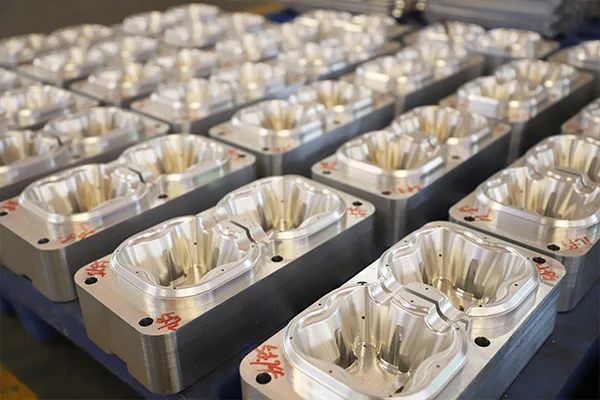
Vacuum forming deposits pulp onto molds shaped to the battery’s exact dimensions. Compartments need to fit closely enough that nothing shifts once loaded — dimensional accuracy isn’t optional here.
03 / DRYING
Freshly formed pulp holds significant moisture. This is also where energy costs accumulate fastest on a line, so efficiency here affects unit economics, not just product quality.
04 / HOT PRESSING
Optional, but standard for premium or branded packaging — tightens tolerances and improves surface finish beyond what forming and drying alone can deliver.
The equipment side: what actually determines production quality
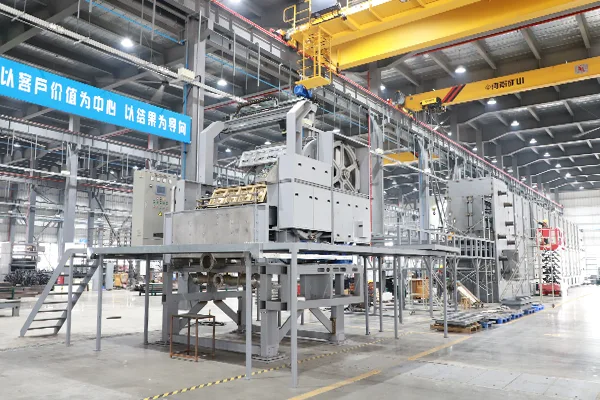
It’s tempting to think of mold design as the main variable in molded pulp production, but in practice the equipment behind the mold — the pulping system, the forming line, the drying and pressing stations — determines whether that mold design translates into consistent output at scale. A great mold paired with an unstable pulping system still produces inconsistent batches.
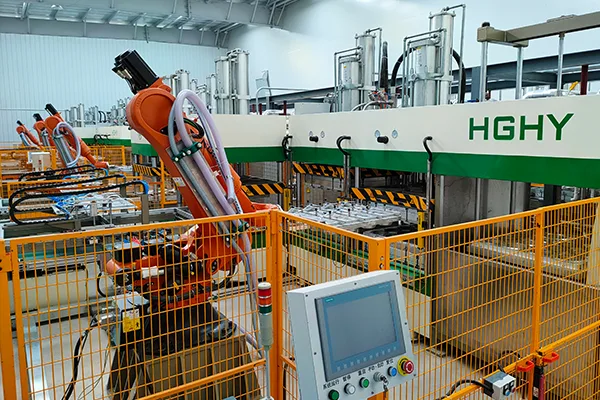
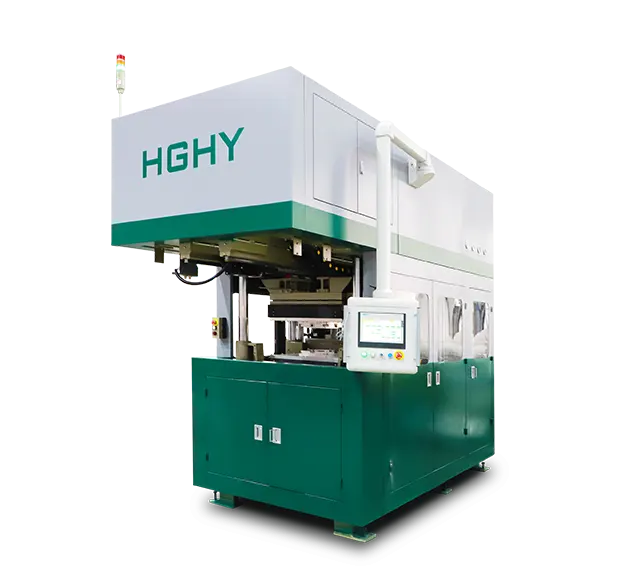
HGHY has spent close to three decades building pulp molding equipment, starting in food packaging and egg tray production and expanding into more specialized industrial applications, including high-end fiber packaging for electronics, cosmetics, and instrument or medical device protection — the same precision-tooling category that battery packaging falls into. Their thermoforming line, built around reciprocating technology with tight draft angles and small R-angle tolerances, was developed specifically for products that need that level of dimensional control rather than the looser tolerances acceptable in commodity packaging like egg trays.
When comparing equipment from different suppliers for a battery packaging line, these are the specifications worth putting on the table before signing anything:
| Specification | Why it matters for battery packaging |
|---|---|
| Mold precision & draft angle | A draft angle around 0.5° with small R-angles keeps internal walls snug against the battery instead of leaving play that lets it shift in transit. |
| Drying energy efficiency | Drying is typically the largest energy draw on a line. Ask for verified consumption per unit of output, not general efficiency claims. |
| PLC automation level | Fully automatic, PLC-controlled forming and trimming reduces the human-error margin — more critical here than for commodity packaging given tighter tolerances. |
| Upgrade & scale-up path | Confirm whether a hot-press stage can be added later as product lines move upmarket, rather than locking into a fixed configuration. |
It’s also worth asking a supplier directly: has their equipment been used for precision applications beyond standard tableware or egg trays? Do they support mold development, or only sell machinery? What does installation and after-sales support look like for an overseas buyer? And can the line scale from a pilot run to full industrial capacity without a complete equipment swap? These questions tend to separate suppliers who understand custom industrial packaging from those whose experience is mostly in standardized, high-volume commodity products — and battery packaging sits closer to the former.
Where the market is heading
The pressures pushing battery manufacturers toward molded pulp aren’t slowing down. EV production continues to scale, energy storage deployment is expanding, and plastic restrictions are tightening in a growing number of export markets. None of that is a sudden shift — it’s a steady accumulation of regulatory and commercial pressure that makes the switch from foam-based packaging look less like an environmental gesture and more like a practical operating decision.
That doesn’t mean molded pulp replaces plastic packaging everywhere — there are still applications where moisture resistance or specific electrical insulation requirements call for a different material or a hybrid approach. But for a growing share of battery transport and protection use cases, it’s becoming the default rather than the alternative.
FAQ
Is molded pulp packaging strong enough to protect batteries during transport?
Yes, provided the structural design accounts for the specific battery’s weight and shape. The protection comes from compartmentalization and reinforced contact points rather than from the fiber material alone, and this approach has been validated across export shipping, warehouse handling, and long-haul transport for various battery formats.
What raw materials go into molded pulp battery packaging?
Recycled paper pulp, waste cardboard, bamboo fiber, wood pulp, and agricultural fibers like sugarcane bagasse are the most common inputs, with the exact blend depending on the strength and surface finish the application requires.
Can molded pulp fully replace plastic battery packaging?
For many applications, yes — particularly where recyclability and biodegradability are priorities. Some specialized cases involving moisture sensitivity or insulation requirements may still call for plastic or hybrid solutions, so it’s worth evaluating on a product-by-product basis rather than assuming a blanket substitution.
What equipment is required to manufacture molded pulp battery packaging?
A complete line typically includes a pulping system, a forming machine, a drying system, and — for higher-precision applications like battery packaging — a hot pressing stage to tighten tolerances and improve surface quality.
Why do manufacturers look at HGHY for this kind of equipment?
HGHY’s background in high-precision thermoforming equipment — originally built for 3C electronics and high-end packaging applications — translates directly to the tight tolerances battery packaging requires, backed by decades of international installation and support experience.