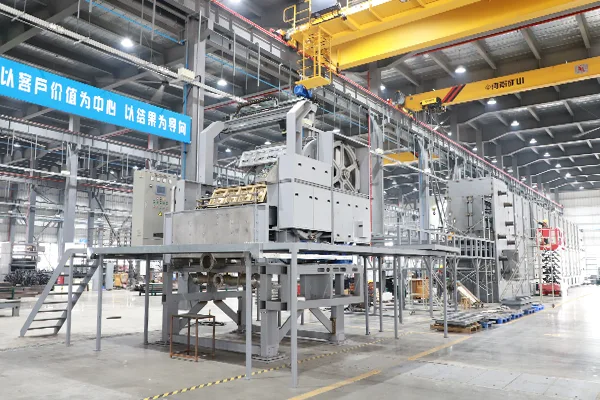
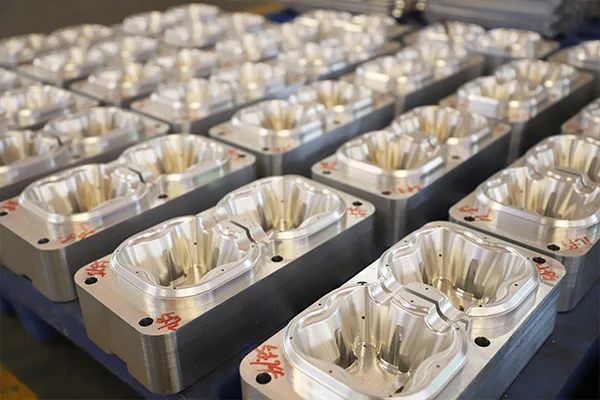
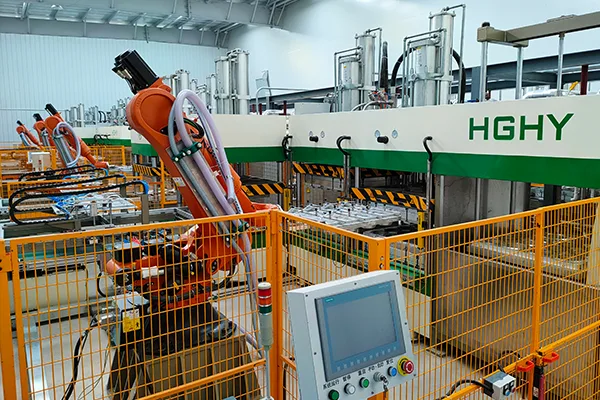
In pulp molding production, the hot pressing machine plays a crucial role in egg tray manufacturing. Its main function is to compress and heat semi-dried trays, ensuring a smoother surface, better dimensional accuracy, and improved strength. However, during operation, hot pressing machines often encounter issues that directly affect product quality, production efficiency, and energy consumption.
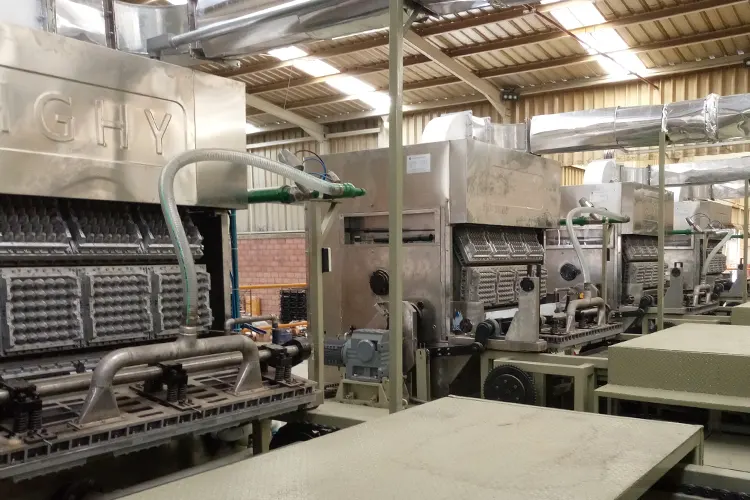
This article analyzes the most common problems, their causes, and possible solutions.
1. Uneven Forming
Symptoms: Trays appear thicker on one side, uneven density, or deformed edges.
Causes:
- Uneven temperature distribution across the mold
- Unstable pressing pressure
- Inconsistent moisture content of semi-finished trays
Solutions:
- Upgrade heating systems to ensure uniform temperature
- Maintain stable hydraulic pressure during pressing
- Control water content before hot pressing to achieve consistency
2. Demolding Difficulties
Symptoms: Trays stick to the mold, tear, or deform during release.
Causes:
- Rough or contaminated mold surfaces
- Insufficient vacuum release or air-blowing assistance
- Excessive moisture in semi-finished trays
Solutions:
- Polish or coat the mold surface with anti-adhesive materials
- Ensure proper air-blow or vacuum release mechanisms
- Adjust drying parameters to reduce excess moisture
3. Temperature Control Issues
Symptoms: Burnt surfaces, incomplete compaction, or weak strength.
Causes:
- Faulty electric heating elements, steam, or thermal oil system
- Malfunctioning temperature controllers
- Poor heat transfer due to mold design or thickness
Solutions:
- Regular inspection and replacement of heating components
- Install precise temperature control systems with real-time monitoring
- Optimize mold design to improve heat conduction efficiency
4. Insufficient or Unstable Pressure
Symptoms: Loose structure, unclear edges, or incomplete compaction.
Causes:
- Hydraulic fluctuations
- Oil cylinder seal wear and leakage
- Improper pressure settings
Solutions:
- Check hydraulic circuits and replace worn seals regularly
- Adjust pressure parameters for optimal compaction
- Use monitoring systems to detect and stabilize pressure changes
5. Reduced Productivity
Symptoms: Longer pressing cycles, lower output.
Causes:
- Overly long hot pressing cycle times
- Low mold heating efficiency
- Manual or inefficient loading/unloading
Solutions:
- Optimize process parameters (temperature, pressure, cycle time)
- Improve mold heating systems for faster stabilization
- Introduce automated feeding and demolding systems
6. Mold Wear and Blockage
Symptoms: Mold surfaces become rough, blocked, or unable to form properly.
Causes:
- Long-term use without cleaning
- Excess pulp impurities in raw material
- Lack of systematic maintenance
Solutions:
- Implement routine cleaning (daily flushing, scheduled deep cleaning)
- Use pulp pretreatment equipment to filter impurities
- Apply durable mold materials and anti-blocking designs
7. High Energy Consumption
Symptoms: Excessive steam, electricity, or thermal oil usage.
Causes:
- Inefficient heating systems
- Poor mold insulation
- Overly long pressing cycles
Solutions:
- Upgrade to high-efficiency heating and insulation systems
- Shorten cycle times through process optimization
- Apply energy monitoring systems for real-time control
Conclusion
The stability of hot pressing machines directly impacts the quality, consistency, and efficiency of egg tray production. By focusing on temperature, pressure, mold condition, and energy management, manufacturers can significantly reduce downtime, extend equipment lifespan, and lower production costs.
Implementing preventive maintenance and adopting optimized process control are the keys to achieving high-quality products and sustainable production in the pulp molding industry.